![[personal profile]](https://www.dreamwidth.org/img/silk/identity/user.png) philosoraptor42
philosoraptor42Finally here is my long-overdue set of Hitchcock reviews. I have now seen the last 20 films of Hitchcock's career. Since I am working through Hitchcock's films in reverse order, these four are the earliest I have seen.
As before, the reviews below are in reverse order of preference (finishing with my least favourite), but the films were viewed in the following order: Strangers on a Train (1951), Stage Fright (1950), Under Capricorn (1949), Rope (1948)

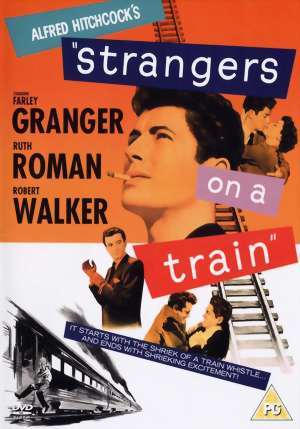
Strangers on a Train (1951)
This is definitely a clear favourite out of Hitchcock's movies. The stranger on the train turns up pretty early on and turns out actually to know quite a bit about the protagonist (who is actually a professional tennis player). He feels that a kind of 'murder exchange exercise' would solve problems for the both of them. He argues that both of them have a particular thorn in their side without whom their lives would be a great deal easier. The protagonist tries to humour the stranger, but he never actually agrees to the scheme.
The stranger is clearly quite disturbed and it seems that the character of Norman Bates didn't come out of nowhere in Hitchcock's career. Portraying figures who are slightly off-kilter with a close connection to their mother, seems to be more tied to Hitchcock's fascination with Freudian psychology than with the figure of Ed Gein.
The power play between the protagonist and the stranger continues throughout the film, with the stranger anticipating possible attempts to escape from the arrangement. He also shows up to events held by the high profile family of the protagonist's wife-to-be announcing himself as the protagonist's 'friend'.
As disturbing as the stranger may be, he is always civil and genuinely wants to think of the protagonist as a personal friend. (Which perhaps makes him all the creepier.)
With fantastic dialogue, pacing, filming and some wonderful performances all round, this is definitely one of Hitchcock's best. Perhaps slightly lacking the style of "Psycho" and the scope of "North By Northwest", but asides from those two goliaths of Hitchcock's career, I would say that "Strangers On A Train" is the very best out the eighteen other Hitchcock films I have seen so far. Tense, intelligent, yet thoroughly entertaining with an array of engaging characters.
A+

Rope (1948)
"Rope" is filmed as if it were one long continuous shot. Occasionally the camera is moved close into someone's back or into a dark corner so that a cut can be made subtley. While this conceit is fairly obvious, we still get the intended impression of a continuous scene. Everything happens in one flat.
The film begins, perhaps unsurprisingly for a Hitchcock film, with a murder. However, what is surprising is when the murderers follow it up by instantly getting ready for a party which is to take place within their own flat - and with the body still there.
Of the two murderers, one is extremely confident and rather smarmy. It was his idea to hold a dinner party after the murder. The other is extremely nervous and involuntarily highly troubled by the murder he helps to commit.
It is revealed that one person who has been invited to the dinner party is an extremely intelligent professor from their university. This is yet another role for James Stewart and I must admit that it's my favourite of Stewart's performances. In all his other performances he seemed to be involved in central relationships with women in spite of demonstrating some level of misogyny in his treatment of them. Here he is still somewhat condescending to some female characters, but he remains charming for the most part and thankfully isn't paired off with a female character.
It turns out that this professor has a theory which he shares with his students that murder would be acceptable if you are powerful enough to justify it. When the subject is raised he jokes morbidly about using murder to avoid paying for a restaurant dinner or rent.
Here is where the weak element of the film presents itself. The threat is always present that the professor, or anyone else, will discover the body in the flat; the professor in particular. However, as things unfold it's not entirely clear why a professor, whose keen mind is able to connect so many ideas so easily, is seemingly able to be shocked that his ideas, when put into practice, would involve a murder. The best explanation I can think of is that the murder victim is yet another of his students and so while another victim might not have affected him so badly, the murder of one of his bright students by another bright student is too close and personal to leave him unaffected emotionally.
"Rope" is very tightly scripted and choreographed, with the motions and conversations of each character being very clearly planned. The ideology behind the murder is that expressed in Dostoyevsky's "Crime and Punishment" that major figures like Napoleon had the power and status to use murder to get what they want and while it might have been slightly better handled, any issues aren't great enough to undermine the performances and plot of the film as a whole.
The characters and the way they interact is absolutely brilliant, clearly representing some of Hitchcock's best work. It's definitely the best performance from James Stewart in a Hitchcock movie.
A+

Stage Fright (1950)
There's some slight trickery involved at the beginning of this film which I won't reveal here. I'll just note that while this was a cause of great controversy at the time, I was a lot happier with the film as a result.
The movie opens with an actor and actress in a car. Jane Wyman, who essentially plays the protagonist of the film, is listening to Richard Todd explaining his predicament. We then see a flashback to show us what happened. Apparently he has been framed for murder by a woman he was in a relationship with and the protagonist, who is infatuated with him, is convinced that she should help him prove his innocence.
Naturally at this stage I am screaming at the screen "just go to the police!" But then again, the film doesn't ignore the idea that they'd be better off just going to the authorities. The first place the two of them go is to the protagonist's father (played by Alastair Sim) who is not only a wonderful colourful character, but also provides a desperately needed voice of reason.
Eventually we see Michael Wilding appear on the scene as a policeman investigating the murder. With Wyman doing some detective work of her own as she investigates the femme fatale who is trying to frame the man she loves, she inevitably runs into this detective at several points. There's also tension involved due to her hiding a prime suspect in her parents' house. Wilding gives a brilliant performance and is a real highlight of the film.
Another highlight of the film is one small scene featuring the comedian Joyce Grenfell. She plays a wonderfully scatty handler of the duck-shooting range at the fair. If you haven't seen any sketches from Joyce Grenfell (or just fancy watching them again anyway) I've placed some video links at the end of this post for you.
Stage Fright isn't perfect. The plot meanders a bit and initially I couldn't help but feel the protagonist was stupid not to just go to the police, but once the film gets going it really picks up. I enjoyed this film a lot. Held together by some pretty awesome performances, this is a very good Hitchcock film.
A-

Under Capricorn (1949)
It was great to see Michael Wilding, the detective from "Stage Fright" return here. This time he's the main protagonist. A somewhat irresponsible opportunist hoping to make his fortune in the easiest way possible. He befriends one of the ex-cons who seems to be doing particularly well for himself and who himself employs ex-cons to help run his household; the film being set in Australia in the early 19th century.
One element I haven't mentioned in previous reviews is the music and somehow the music felt rather more cheesy than normal in this film. Also the DVD I saw of this film seemed to be of lower quality, with the settings seemed much more obviously like sets than normal. I think perhaps the costume drama element of "Under Capricorn" was not playing to Hitchcock's strengths.
Unlike in a lot of the other Hitchcock films, I found myself getting rather bored this time. Hitchcock may be the master of suspense, but he's also normally rather excellent at giving quicker pacing to his movies when it's needed. Here I felt like I spent a lot of the running time waiting for something to happen.
This isn't one of the worst films I've seen from Hitchcock. The plot works well enough and the performances are pretty good, especially from Michael Wilding who lights up every one of his scenes, even when the film is running at an irritatingly slow pace. Someone else might find this film a lot more appealing, but for me it kept pushing the wrong buttons and just wasn't exciting enough.
C-
My Ranking Of Hitchcock's Final 20 Films
1. North By Northwest (1959) A+
2. Psycho (1960) A+
3. Strangers On A Train (1951) A+
4. The Birds (1963) A+
5. Rope (1955) A+
6. To Catch a Thief (1955) A+
7. Rear Window (1954) A+
8. The Trouble with Harry (1955) A-
9. Dial M for Murder (1954) A-
10. Stage Fright (1950) A-
11. Topaz (1969) B+
12. The Wrong Man (1956) C+
13. Family Plot (1976) C+
14. Under Capricorn (1949) C-
15. Frenzy (1972) D+
16. The Man Who Knew Too Much (1956) D-
17. I Confess (1953) D-
18. Torn Curtain (1966) D-
19. Marnie (1964) E-
20. Vertigo (1958) E-
Joyce Grenfell sketches
(Lady in Church - video link)
(First flight - video link)
(Nursery School - video link)
As before, the reviews below are in reverse order of preference (finishing with my least favourite), but the films were viewed in the following order: Strangers on a Train (1951), Stage Fright (1950), Under Capricorn (1949), Rope (1948)
Strangers on a Train (1951)
This is definitely a clear favourite out of Hitchcock's movies. The stranger on the train turns up pretty early on and turns out actually to know quite a bit about the protagonist (who is actually a professional tennis player). He feels that a kind of 'murder exchange exercise' would solve problems for the both of them. He argues that both of them have a particular thorn in their side without whom their lives would be a great deal easier. The protagonist tries to humour the stranger, but he never actually agrees to the scheme.
The stranger is clearly quite disturbed and it seems that the character of Norman Bates didn't come out of nowhere in Hitchcock's career. Portraying figures who are slightly off-kilter with a close connection to their mother, seems to be more tied to Hitchcock's fascination with Freudian psychology than with the figure of Ed Gein.
The power play between the protagonist and the stranger continues throughout the film, with the stranger anticipating possible attempts to escape from the arrangement. He also shows up to events held by the high profile family of the protagonist's wife-to-be announcing himself as the protagonist's 'friend'.
As disturbing as the stranger may be, he is always civil and genuinely wants to think of the protagonist as a personal friend. (Which perhaps makes him all the creepier.)
With fantastic dialogue, pacing, filming and some wonderful performances all round, this is definitely one of Hitchcock's best. Perhaps slightly lacking the style of "Psycho" and the scope of "North By Northwest", but asides from those two goliaths of Hitchcock's career, I would say that "Strangers On A Train" is the very best out the eighteen other Hitchcock films I have seen so far. Tense, intelligent, yet thoroughly entertaining with an array of engaging characters.
A+
Rope (1948)
"Rope" is filmed as if it were one long continuous shot. Occasionally the camera is moved close into someone's back or into a dark corner so that a cut can be made subtley. While this conceit is fairly obvious, we still get the intended impression of a continuous scene. Everything happens in one flat.
The film begins, perhaps unsurprisingly for a Hitchcock film, with a murder. However, what is surprising is when the murderers follow it up by instantly getting ready for a party which is to take place within their own flat - and with the body still there.
Of the two murderers, one is extremely confident and rather smarmy. It was his idea to hold a dinner party after the murder. The other is extremely nervous and involuntarily highly troubled by the murder he helps to commit.
It is revealed that one person who has been invited to the dinner party is an extremely intelligent professor from their university. This is yet another role for James Stewart and I must admit that it's my favourite of Stewart's performances. In all his other performances he seemed to be involved in central relationships with women in spite of demonstrating some level of misogyny in his treatment of them. Here he is still somewhat condescending to some female characters, but he remains charming for the most part and thankfully isn't paired off with a female character.
It turns out that this professor has a theory which he shares with his students that murder would be acceptable if you are powerful enough to justify it. When the subject is raised he jokes morbidly about using murder to avoid paying for a restaurant dinner or rent.
Here is where the weak element of the film presents itself. The threat is always present that the professor, or anyone else, will discover the body in the flat; the professor in particular. However, as things unfold it's not entirely clear why a professor, whose keen mind is able to connect so many ideas so easily, is seemingly able to be shocked that his ideas, when put into practice, would involve a murder. The best explanation I can think of is that the murder victim is yet another of his students and so while another victim might not have affected him so badly, the murder of one of his bright students by another bright student is too close and personal to leave him unaffected emotionally.
"Rope" is very tightly scripted and choreographed, with the motions and conversations of each character being very clearly planned. The ideology behind the murder is that expressed in Dostoyevsky's "Crime and Punishment" that major figures like Napoleon had the power and status to use murder to get what they want and while it might have been slightly better handled, any issues aren't great enough to undermine the performances and plot of the film as a whole.
The characters and the way they interact is absolutely brilliant, clearly representing some of Hitchcock's best work. It's definitely the best performance from James Stewart in a Hitchcock movie.
A+
Stage Fright (1950)
There's some slight trickery involved at the beginning of this film which I won't reveal here. I'll just note that while this was a cause of great controversy at the time, I was a lot happier with the film as a result.
The movie opens with an actor and actress in a car. Jane Wyman, who essentially plays the protagonist of the film, is listening to Richard Todd explaining his predicament. We then see a flashback to show us what happened. Apparently he has been framed for murder by a woman he was in a relationship with and the protagonist, who is infatuated with him, is convinced that she should help him prove his innocence.
Naturally at this stage I am screaming at the screen "just go to the police!" But then again, the film doesn't ignore the idea that they'd be better off just going to the authorities. The first place the two of them go is to the protagonist's father (played by Alastair Sim) who is not only a wonderful colourful character, but also provides a desperately needed voice of reason.
Eventually we see Michael Wilding appear on the scene as a policeman investigating the murder. With Wyman doing some detective work of her own as she investigates the femme fatale who is trying to frame the man she loves, she inevitably runs into this detective at several points. There's also tension involved due to her hiding a prime suspect in her parents' house. Wilding gives a brilliant performance and is a real highlight of the film.
Another highlight of the film is one small scene featuring the comedian Joyce Grenfell. She plays a wonderfully scatty handler of the duck-shooting range at the fair. If you haven't seen any sketches from Joyce Grenfell (or just fancy watching them again anyway) I've placed some video links at the end of this post for you.
Stage Fright isn't perfect. The plot meanders a bit and initially I couldn't help but feel the protagonist was stupid not to just go to the police, but once the film gets going it really picks up. I enjoyed this film a lot. Held together by some pretty awesome performances, this is a very good Hitchcock film.
A-
Under Capricorn (1949)
It was great to see Michael Wilding, the detective from "Stage Fright" return here. This time he's the main protagonist. A somewhat irresponsible opportunist hoping to make his fortune in the easiest way possible. He befriends one of the ex-cons who seems to be doing particularly well for himself and who himself employs ex-cons to help run his household; the film being set in Australia in the early 19th century.
One element I haven't mentioned in previous reviews is the music and somehow the music felt rather more cheesy than normal in this film. Also the DVD I saw of this film seemed to be of lower quality, with the settings seemed much more obviously like sets than normal. I think perhaps the costume drama element of "Under Capricorn" was not playing to Hitchcock's strengths.
Unlike in a lot of the other Hitchcock films, I found myself getting rather bored this time. Hitchcock may be the master of suspense, but he's also normally rather excellent at giving quicker pacing to his movies when it's needed. Here I felt like I spent a lot of the running time waiting for something to happen.
This isn't one of the worst films I've seen from Hitchcock. The plot works well enough and the performances are pretty good, especially from Michael Wilding who lights up every one of his scenes, even when the film is running at an irritatingly slow pace. Someone else might find this film a lot more appealing, but for me it kept pushing the wrong buttons and just wasn't exciting enough.
C-
My Ranking Of Hitchcock's Final 20 Films
1. North By Northwest (1959) A+
2. Psycho (1960) A+
3. Strangers On A Train (1951) A+
4. The Birds (1963) A+
5. Rope (1955) A+
6. To Catch a Thief (1955) A+
7. Rear Window (1954) A+
8. The Trouble with Harry (1955) A-
9. Dial M for Murder (1954) A-
10. Stage Fright (1950) A-
11. Topaz (1969) B+
12. The Wrong Man (1956) C+
13. Family Plot (1976) C+
14. Under Capricorn (1949) C-
15. Frenzy (1972) D+
16. The Man Who Knew Too Much (1956) D-
17. I Confess (1953) D-
18. Torn Curtain (1966) D-
19. Marnie (1964) E-
20. Vertigo (1958) E-
Joyce Grenfell sketches
(Lady in Church - video link)
(First flight - video link)
(Nursery School - video link)


